A new model of care for people living with chronic conditions
The core premise
The gap it fills
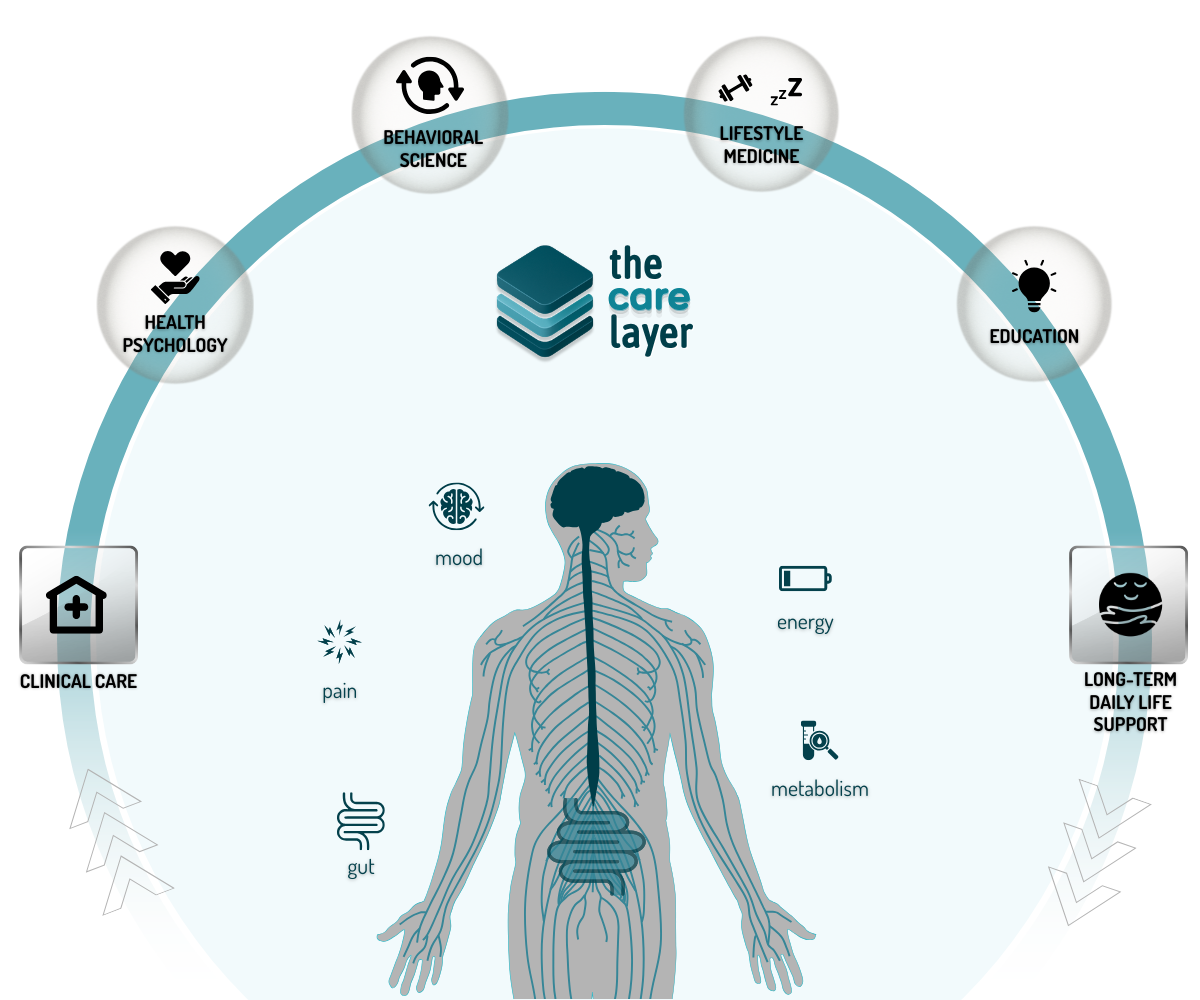
What it does
How it is delivered
For practitioners — through courses
Evidence-based education in The Care Layer methodology, designed for health professionals who want to go deeper into whole-person chronic condition care.
For patients — through Flare
Flare is the patient-facing companion built on The Care Layer methodology. It helps people with chronic conditions function, decide, and follow through on the days that are hardest — through structured, symptom-based support available whenever they need it.
From everyday health to complex conditions
Functional GI Disorders
IBS, functional gut disorders, and digestive symptoms often reflect the interaction between stress, nervous system regulation, diet, and behavior. Structured strategies that integrate psychogastroenterology, plant-forward nutrition, culinary nutrition education, stress regulation, and behavior-change support.
Chronic Pain Syndromes
Persistent pain and fatigue rarely stem from a single cause. Particular emphasis is placed on nociplastic pain conditions, such as fibromyalgia, using an integrated approach that includes pain neuroscience education, mindfulness, anti-inflammatory nutrition, psychological therapies, and behavioral health.
Emotional & Binge Eating
Eating patterns are closely connected to stress, mood, and nervous system regulation. Disordered eating is addressed from multiple fronts, integrating positive embodiment, nutritional therapies, breathwork, therapeutic yoga, psychology, and behavior-change science to help patients build a healthier relationship with food.
Burnout & Chronic Stress
Stress plays a central role in many of the conditions listed here. Burnout requires a targeted approach integrating lifestyle medicine, nervous system regulation, and behavioral strategies to support recovery and resilience.
Metabolic & Lifestyle-Related Health
Conditions such as metabolic syndrome, prediabetes, and cardiovascular risk benefit from lifestyle medicine, plant-forward nutrition, movement, culinary nutrition education, and long-term habit change supported by structured education and follow-through.
Women's Health & Hormonal Transitions
We support conditions such as PCOS, endometriosis, and perimenopause, focusing on reducing inflammation and pain while supporting physical and mental health. Our approach integrates lifestyle medicine, nervous system regulation, and behavior-change strategies to support long-term wellbeing.
Mental Health & Emotional Well-Being
Anxiety, burnout, and mood challenges are closely connected to sleep, nutrition, stress, and daily habits. Lifestyle psychiatry, nutritional psychiatry, psychology, and behavior-change science complement traditional mental health care.
Sleep & Recovery
Sleep plays a central role in physical and mental health and is often a priority area for change. Individualized strategies include sleep hygiene, circadian rhythm regulation, relaxation techniques, supplementation, and behavior-change coaching to improve restorative sleep and recovery.
Complex or Unexplained Symptoms
Many patients experience overlapping symptoms that don’t fit neatly into a single diagnosis. The Care Layer provides a structured, whole-person, interdisciplinary framework to bring clarity and direction.

The Care Layer
Featured links